Element and System Design for Active and Passive Vibration Isolation
Contents
- Tags
- Vibration Isolation, Eddy Current Damping
- Reference
- (Zuo 2004)
- Author(s)
- Zuo, L.
- Year
- 2004
Vibration isolation systems can have various system architectures. When we configure an active isolation system, we can use compliant actuators (such as voice coils) or stiff actuators (such as PZT stacks). We also need to consider how to combine the active actuation with passive elements: we can place the actuator in parallel or in series with the passive elements. Most of the isolation systems fall into the category of soft active mounts, in which a compliant actuator is placed in parallel with a spring. A second category is hard active mounts, in which the payload mass is directly mounted to a stiff actuator. Soft active mounts generally have advantages for better passive performance; hard active mounts are favored for payload disturbance rejection, but combination with passive stages is required due to the lack of isolation performance out of the control bandwidth. Beard, von Flotow and Schubert proposed another type of hard mount, wherein a stiff PZT actuator is placed in series with a spring stiffer than the top passive stage. They found that coupling from flexible modes is much smaller than in soft active mounts in the load (force) feedback. Note that reaction force actuators can also work with soft mounts or hard mounts.
Passive Vibration Isolation
The Role of damping and its practical constructions
Viscous damping
Eddy-current damper
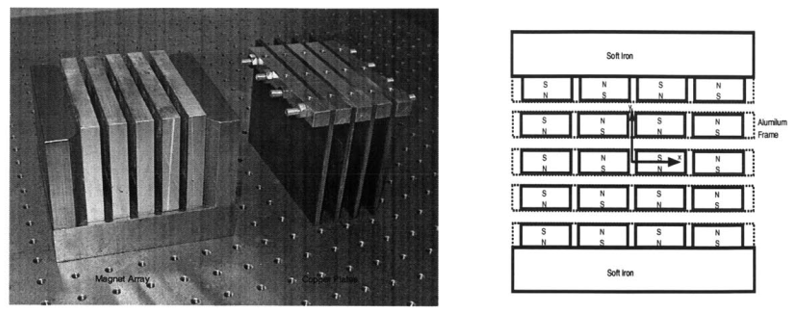
Figure 1: (left) Magnetic field and conductor plates assemblies, (right) magnet arrays
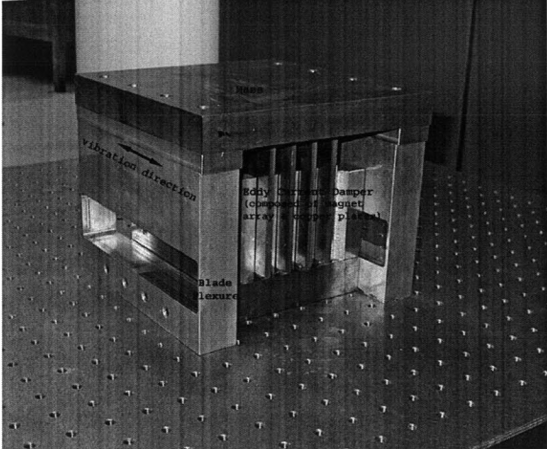
Figure 2: Single DoF system damped by eddy current damper
Elements and configurations for active vibration systems
System architectures
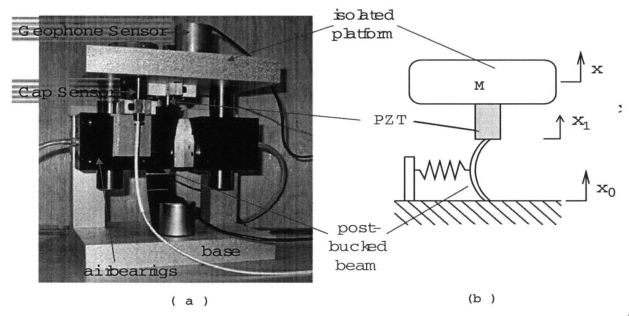
Figure 3: PZT actuator and spring in series
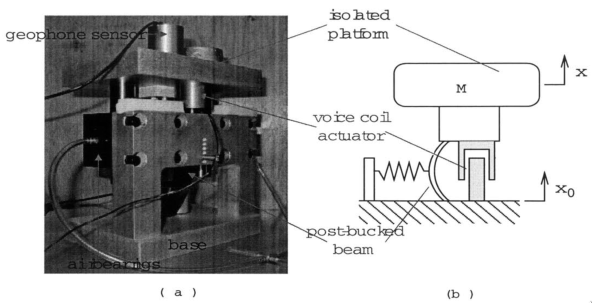
Figure 4: Voice coil actuator and spring in parallel
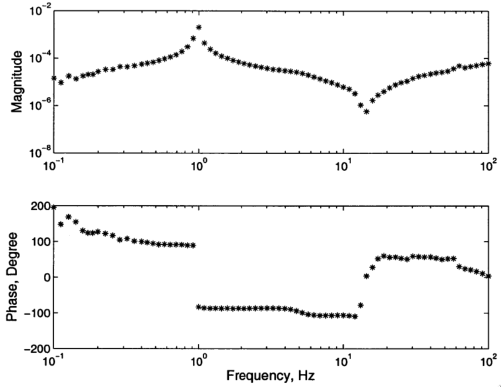
Figure 5: Transmission from PZT voltage to geophone output
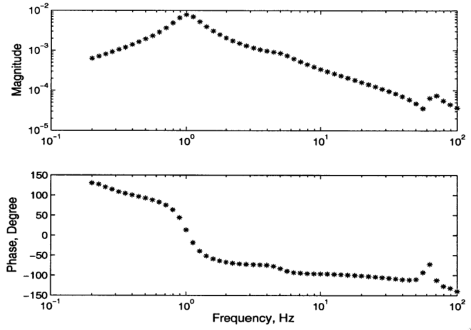
Figure 6: Transmission from voice coil voltage to geophone output